Best Yacht for First Time Charter
Choosing the best yacht for first time charter starts with comfort, crew, and route. Here's how to pick a yacht that feels easy and fun.
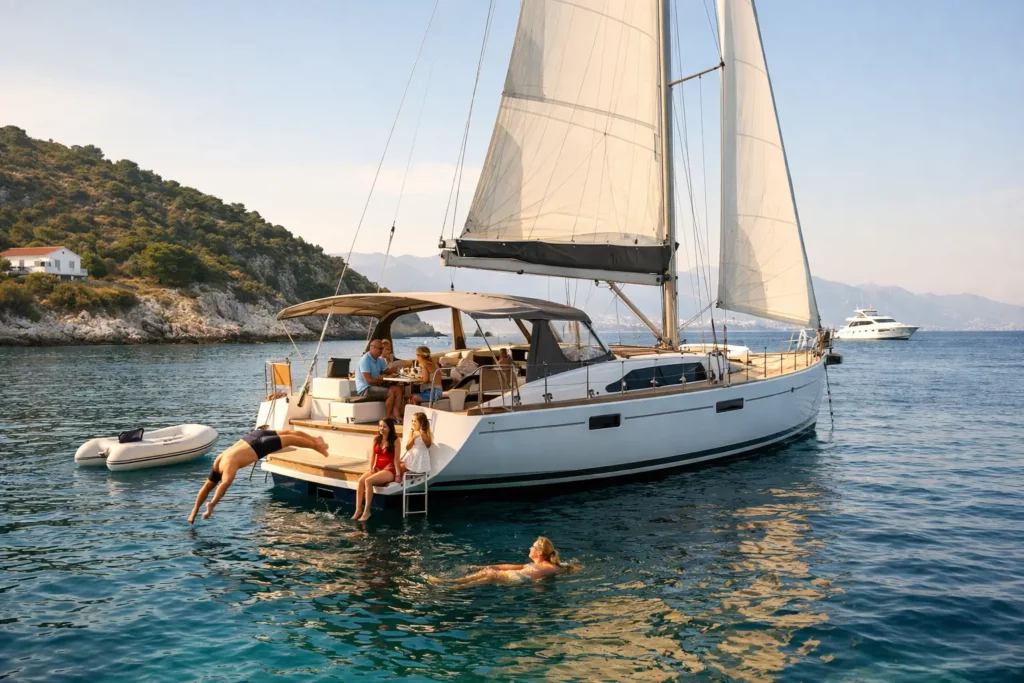
The first mistake many new charter guests make is assuming bigger means better. On paper, a larger yacht looks more luxurious and capable. In real life, the best yacht for first time charter is usually the one that makes your days feel easy – simple to move around, comfortable at anchor, and suited to the way your group actually wants to spend a week on the water.
That choice is rarely about status. It is about fit. Your first charter should feel exciting, not overcomplicated, and the right yacht sets that tone from the first boarding to the final swim stop.
What is the best yacht for first time charter?
For most first-time charter guests, the safest answer is a crewed or skipper-assisted catamaran in the 40 to 50 foot range. That size gives you enough space to relax, sleep well, and enjoy privacy without stepping into a yacht that feels oversized for your needs.
Catamarans are popular with beginners for good reason. They are generally more stable than monohulls, offer wide outdoor living areas, and make everyday life on board feel intuitive. Boarding is easier, cabins are often more even in size, and the saloon and cockpit create a social layout that works well for couples, families, and groups of friends.
That does not mean a catamaran is always the right answer. If your priority is a classic sailing feel, a monohull can be more engaging and often better value. If your dream is pure comfort with little interest in sailing itself, a motor yacht may suit you better for short hops and high-service days. The point is not to follow a trend. The point is to match the boat to the holiday.
Why first-time charter guests usually do better with comfort over complexity
Your first charter comes with a learning curve even when you have a skipper. There are new rhythms to understand – packing light, sharing common spaces, showering with limited water, timing harbor arrivals, and adjusting plans around wind and sea conditions.
A yacht that reduces friction matters more than one with impressive specifications. Wide decks, easy access to the water, shaded dining space, practical cabins, and a friendly layout do more for your holiday than technical features you may barely use.
This is where first-time guests often benefit from experienced guidance. A good broker will not just ask how many cabins you need. They will ask who is traveling, whether anyone gets seasick, how much privacy matters, whether you picture lively beach clubs or quiet coves, and whether your group values sailing time or destination time more.
Catamaran vs monohull for a first charter
If you are choosing between the two, think less about sailing identity and more about onboard experience.
Catamaran
A catamaran is often the easiest recommendation for a first charter because it feels immediately comfortable. The beam creates more usable space, the motion is flatter at anchor, and the outdoor areas are excellent for long lunches, sunbathing, and casual evenings. For families with children or mixed-age groups, that stability can make a major difference.
The trade-off is price. Catamarans are usually more expensive than monohulls of similar sleeping capacity, especially in peak Mediterranean weeks. They also need more berth space, which can matter in busy marinas. If your budget is tight, a monohull may deliver a better overall trip when paired with the right itinerary.
Monohull sailing yacht
A monohull is a wonderful option if part of your holiday dream is the sensation of real sailing. It heels, responds to the wind differently, and gives a more traditional connection to the sea. Many couples and smaller groups find that charm irresistible.
Still, it is not automatically the best yacht for first time charter if your group is nervous about motion or expects villa-like space. Cabins can feel tighter, movement on board takes more care, and beginners sometimes underestimate how much onboard volume affects comfort over a full week.
The size sweet spot for beginners
Bigger yachts sound glamorous, but they are not always better for first-timers. A yacht in the 40 to 50 foot range is often the sweet spot because it balances comfort, manageability, and value.
Below that range, you may start sacrificing social space and storage, especially if every berth is filled. Above that range, you are often paying for extra volume or prestige features that matter less on a first trip than guests expect.
If you are a couple, a 40 to 42 foot yacht can feel generous. For two or three couples, or a family wanting a little separation, the mid-40s usually works beautifully. For groups of friends who want equal cabins and plenty of lounging room, a catamaran closer to 46 to 50 feet tends to be the safest bet.
Crewed, skippered, or bareboat?
For a first charter, this decision matters as much as the yacht itself.
If nobody in your group has the qualifications and recent experience for bareboat charter, the answer is simple: do not force it. A skipper changes the entire experience for the better. You gain local knowledge, easier mooring, route flexibility, and a calmer atmosphere when weather shifts.
Even experienced travelers often underestimate how valuable a professional skipper is on a first yacht holiday. They know the sheltered bays, the timing of harbor arrivals, the restaurant spots worth approaching by tender, and the anchorages that look beautiful in photos but become uncomfortable in afternoon wind.
A fully crewed charter adds another layer of ease. If your priority is service, privacy, and a more polished vacation rhythm, crewed is ideal. If you want a more relaxed, hands-on holiday with expert support but without formal service, a skippered charter often feels like the perfect middle ground.
The best yacht for first time charter depends on your group
The boat that works for a honeymoon is not the same one that works for two families traveling together.
For couples, a smaller monohull or compact catamaran can feel intimate and efficient. For families, a catamaran tends to win because children can move around more safely and parents appreciate the easy swim access and larger common areas. For friend groups, equal cabin comfort matters more than many expect. If one cabin is clearly worse than the others, you will hear about it by day two.
This is also where itinerary style matters. If your group wants long lunches at anchor, swimming, and relaxed island hopping, prioritize deck space and water access. If you plan to spend more time ashore in chic ports and restaurants, cabin luxury and marina practicality may matter more.
Features worth paying for on a first yacht charter
Some upgrades change the experience. Others just inflate the brochure.
Air conditioning is worth serious consideration in hot summer periods, especially if your group sleeps poorly in warm cabins. A watermaker can be helpful on longer itineraries, though it is less essential for shorter routes with regular marina stops. Good shade is underrated and often more valuable than another sun pad.
Easy swim access matters too. A practical aft platform or swim ladder will get used every day. So will a tender that is comfortable and simple for shore trips. If anyone in your party is less mobile, ask detailed questions about boarding, steps between levels, and bathroom layout. These small details are often what make a yacht feel right or wrong.
Destination affects the right yacht choice
You do not choose a yacht in isolation. You choose it for a place.
In the Mediterranean, conditions vary more than first-time guests expect. Some areas reward a catamaran’s stable anchoring and spacious living. Others, especially where marina space is tighter or winds pick up sharply, may make a monohull more practical and economical.
This is one reason human guidance still matters. At Summer Yacht Charters, first-time guests are often relieved to learn they do not need to know everything before they inquire. The right boat becomes clearer once destination, group makeup, timing, and budget are looked at together rather than separately.
How to avoid booking the wrong yacht
The wrong yacht is usually not unsafe or poor quality. It is just mismatched.
Problems start when guests book by photos alone, prioritize maximum berths over real comfort, or choose a yacht that fits the budget but not the group dynamic. Another common mistake is underestimating extras such as skipper fees, hostess service, fuel, port charges, and provisioning. A cheaper yacht can become the more expensive holiday if it pushes you into trade-offs that reduce the whole experience.
Ask practical questions. Where will everyone sit for dinner? Are the cabins similar in size? Is there proper shade during the hottest part of the day? How easy is it to get in and out of the water? These answers tell you more than glossy images ever will.
The best first charter is not about impressing anyone. It is about waking up in a quiet bay, having coffee on deck, and feeling that the whole trip is working exactly the way it should. Choose the yacht that makes that feel effortless, and your second charter will be much easier to plan.