How to Charter with Children Without Overplanning
Learn how to charter with children: choose the right yacht, route, skipper, and onboard rhythm for a relaxed family sailing vacation at sea with care.
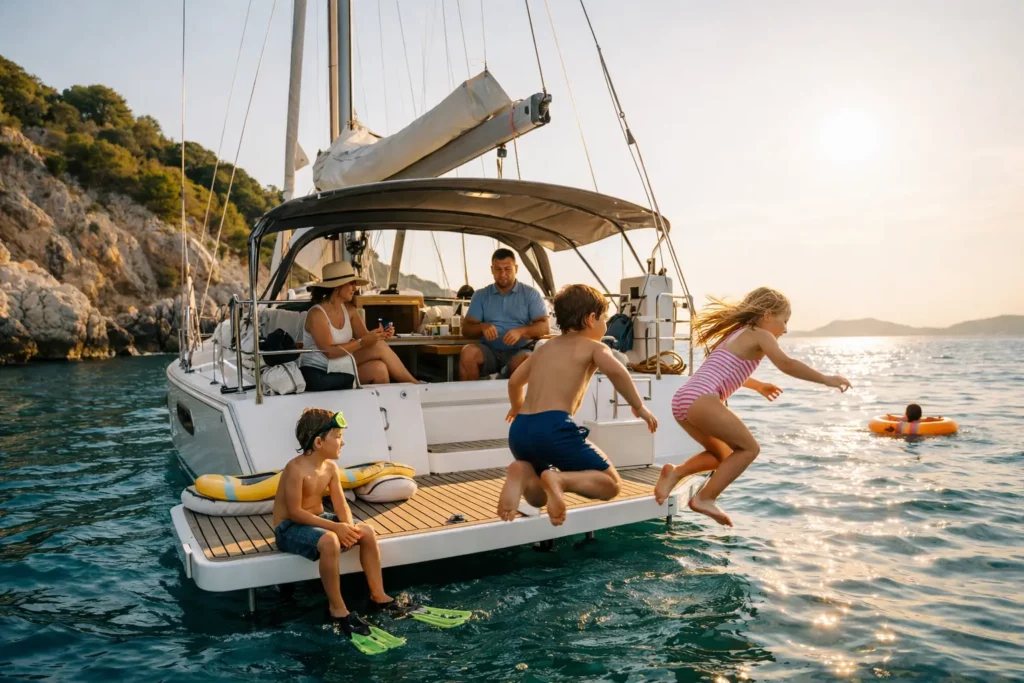
A family charter has a wonderful contradiction at its heart: the days can feel completely free, yet the best ones are thoughtfully planned. Learning how to charter with children is less about turning the yacht into a floating playground and more about choosing a boat, route, and pace that let everyone relax. When the children are comfortable, curious, and well-rested, parents get the rare vacation they were hoping for too.
Start with the family, not the yacht
The right charter begins with an honest look at your family’s travel style. A toddler who still naps, a confident eight-year-old swimmer, and teenagers who want independence will experience the same yacht very differently. Their ages, confidence around water, sleeping routines, and tolerance for heat or motion all matter more than a glossy brochure photo.
For a first family charter, shorter sailing legs are usually the smart choice. Think of a rhythm where you leave after breakfast, swim before lunch, and arrive in a protected bay or marina with plenty of daylight left. A two-hour passage can feel like an adventure. A five-hour crossing in choppy conditions can test even the most enthusiastic crew.
You do not need an activity scheduled for every hour. In fact, children often settle into boat life best when there is room for simple pleasures: spotting fish from the stern, jumping in after lunch, choosing the next beach, or playing cards in the cockpit while dinner cooks. The freedom is real, but a light routine helps it stay enjoyable.
Choose a yacht that gives everyone breathing room
For many families, a catamaran is the easiest introduction to chartering. Its wide deck, level living areas, and stable feel at anchor make everyday life more comfortable, especially for younger children or adults who are worried about seasickness. The cockpit and saloon often create separate places for play, reading, meals, and quiet time without anyone feeling boxed in.
A sailing yacht can be a more intimate and rewarding choice for a smaller family that wants a true sailing experience. It may offer better value in some destinations and delivers that satisfying feeling of moving under sail. The trade-off is less interior space, a narrower deck, and often more movement underway. If your children are active, water-confident, and happy outdoors, that may be part of the fun. If this is their first time at sea, comfort and space may be worth prioritizing.
Look beyond the number of cabins. Ask where everyone will spend time during the day, whether there is shade in the cockpit, how easy it is to get in and out of the water, and whether the layout allows an early bedtime without ending the evening for the adults. A cabin with an ensuite bathroom can be convenient, but a good deck layout and a comfortable communal area often make a bigger difference to family life.
Air conditioning, watermaker capacity, paddleboards, a dinghy with an easy boarding ladder, and reliable refrigeration can all be useful. They are not essential on every trip, but they shape the daily experience. In the height of a Mediterranean summer, shade and cooling deserve serious attention.
How to charter with children safely and confidently
Safety should feel built into the trip, not like a constant lecture. Before departure, ask for properly fitted children’s life jackets and have each child try one on at the marina. It should be comfortable enough that they will actually wear it, with the right buoyancy for their size. Infants and very young children require especially careful planning, and some charter operators may have age recommendations or restrictions for particular boats and conditions.
A clear set of boat rules is more effective than a long list. Life jackets go on when the yacht is moving. No child goes on deck without an adult knowing. Hands stay clear of ropes and winches. Swimming happens only after the engine is off and an adult says it is time. Say the rules calmly on day one, then repeat them naturally as situations arise.
If you are new to sailing or want to be fully present with your children, choose a skippered charter. A professional skipper manages navigation, weather decisions, mooring, and the technical side of the yacht. That removes a great deal of pressure from parents and lets the trip feel like a holiday rather than a practical examination of sailing skills.
A good skipper is also valuable for family pacing. They know which bays are comfortable in the prevailing wind, when to leave before the afternoon breeze builds, and where children can swim safely or step ashore for an ice cream. Let your charter specialist know the children’s ages and any needs before booking so the skipper match and itinerary can be considered properly.
Build an itinerary around small victories
The most memorable family sailing days are rarely the ones with the most miles. They are the days when everyone gets to do something they love. One child may care about a hidden cove, another about a waterfront town, and a parent may simply want a quiet coffee before the boat wakes up. The route should make space for all of it.
In Greece, Croatia, Italy, and other popular Mediterranean cruising grounds, it is tempting to move every day because there is always another beautiful island or harbor ahead. Resist the urge to collect destinations. A relaxed itinerary might include a few short sails, a lay day in a favorite anchorage, and one marina stop for a proper dinner ashore, provisions, and an easy evening walk.
Weather must have the final say. This is not a compromise that ruins the plan. It is part of what makes sailing special. A change in wind might lead to a different island, an earlier arrival, or an extra afternoon swimming in a sheltered bay. When children see that the yacht follows the sea rather than fights it, they often adapt more easily than adults do.
It also helps to include a simple daily choice for the children. Would they like to paddleboard before breakfast or look for a beach after lunch? Would they prefer pasta on board or dinner ashore? Small choices create ownership without handing them the entire route planning job.
Pack for boat life, not a resort
Space on a yacht is precious, so pack less than you think. Soft-sided luggage is much easier to store than hard suitcases. Bring swimsuits, light layers, a sun hat that stays on in the wind, reef-safe sunscreen, sunglasses with a strap, and footwear with good grip. Water shoes are useful on pebbly beaches and rocky shorelines.
A few familiar items can make a cabin feel secure for young children: a favorite stuffed animal, a bedtime book, or a small night-light. For motion sensitivity, speak with a medical professional before traveling and bring any recommended remedies. The first day can feel unfamiliar even in calm weather, so easy snacks, water, and a quiet activity are useful to have close by.
Do not rely on constant entertainment from screens. Downloading a movie or bringing headphones is sensible for a long transfer or an unexpectedly windy afternoon, but yacht life supplies its own material. A compact fishing line, snorkeling mask, sketchbook, waterproof cards, or simple travel game can go a long way. Keep one or two items aside as surprises for the moment when the weather slows things down.
Plan food, sleep, and shore time with kindness
Hunger and fatigue can turn a perfect anchorage into a difficult afternoon. Keep familiar breakfast foods and easy snacks on board, especially at the start of the trip while everyone finds their sea legs. You can explore local food without making every meal an experiment. Fresh fruit, bread, pasta, grilled fish, yogurt, and simple picnic lunches tend to work well across mixed ages.
Sleep can take a night or two to settle. Cabins are cozy, but they may be warmer, darker, or noisier than home. A marina can bring restaurant sounds and neighboring boats, while an anchorage brings gentle movement and water against the hull. Choose calmer overnight spots when possible, close hatches safely if insects are around, and do not underestimate the value of an unhurried morning after a late dinner ashore.
Shore time matters too. Even children who love the sea benefit from running, climbing, and exploring somewhere that is not moving. A beach stop, short village walk, or early evening gelato can reset the mood before returning to the yacht.
Let expert support remove the guesswork
There is no single best family yacht or one perfect route. The right answer depends on the season, destination, budget, children’s ages, and whether you want hands-on sailing or the reassurance of a skipper. That is why real advice before booking is so valuable.
At Summer Yacht Charters, a Real Sailor Assistant can help narrow a large choice of yachts into options that genuinely suit the people coming aboard. Share the details that matter, including sleep routines, swimming confidence, dietary needs, and the kind of days you hope to have. The better the brief, the more natural the vacation feels once you cast off.
Your children may not remember the cabin category or the route exactly. They will remember breakfast in a quiet bay, the first time they steered toward an island, and the warm saltwater swim before dinner. Give them a charter with enough comfort to feel safe and enough freedom to make those moments their own.