How to Provision a Yacht for a Week at Sea
Learn how to provision a yacht with practical quantities, storage advice, local shopping tips, and an easy meal plan for a relaxed charter vacation at sea.
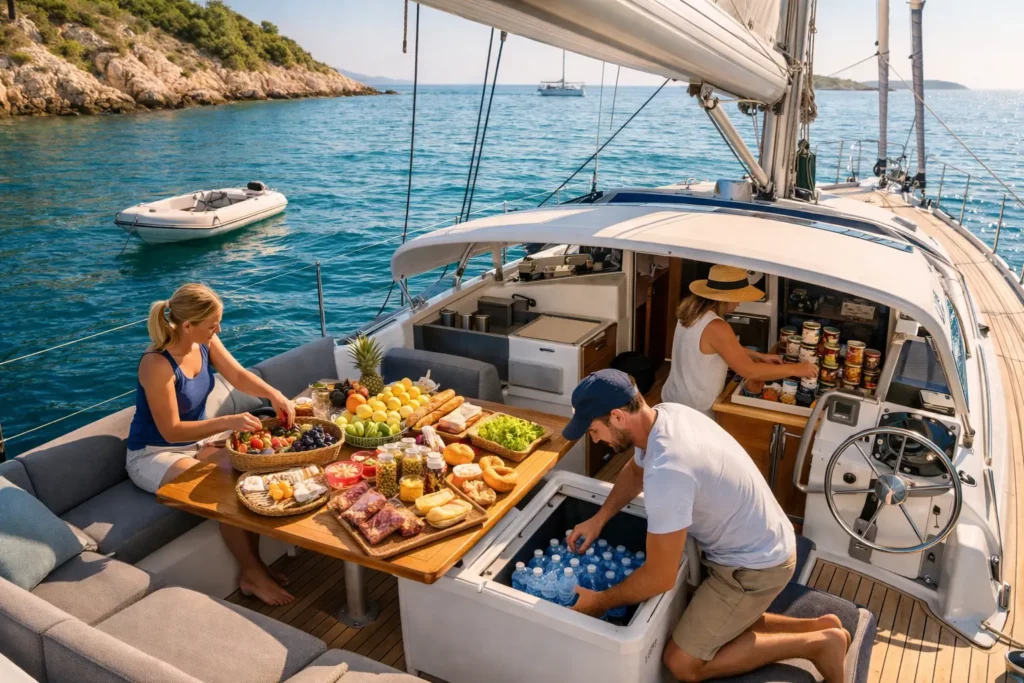
The first sunset at anchor is not the moment to discover that no one bought coffee, drinking water, or food that can be made without a full grocery-store kitchen. Learning how to provision a yacht turns a good sailing vacation into an easy, unhurried one – with cold drinks in the fridge, simple meals ready after a swim, and enough flexibility to say yes to a waterfront taverna when it looks too good to pass up.
Provisioning is not about stocking a floating supermarket. It is about understanding your crew, your route, the boat’s storage, and the rhythm of life at sea. A well-provisioned yacht feels generous without feeling crowded.
Start with Your Charter Plan, Not a Shopping Cart
Before writing a grocery list, confirm the practical details of your charter. How many people are aboard? Are you sailing bareboat or with a skipper? How many nights will you spend in marinas with shops nearby, and how many in quiet bays? A family with young children, for example, usually needs more regular snacks and dependable breakfast supplies than a group planning late dinners ashore.
Your destination matters too. In Greece, Croatia, Italy, and other Mediterranean cruising grounds, fresh produce, bread, seafood, and local specialties are often easy to find in port. That makes it unnecessary to buy every meal for the full week on day one. Plan for the first two or three days, then replenish when you enjoy a village stop or need more ice.
Also ask your charter company what is already aboard. Most yachts have a refrigerator, stove, oven, cookware, dishes, and basic utensils, but capacities vary greatly. A monohull may have limited refrigeration compared with a larger catamaran. Ice makers, blenders, barbecue grills, and watermakers are never safe assumptions.
Check the boat’s real storage space
Yacht galley storage is deep, narrow, and occasionally awkward. Large boxes and bulky packaging take up space quickly, while glass jars can rattle and break underway. Choose compact packaging where possible, decant dry goods into reusable containers or zip bags, and bring a few sealable containers for leftovers.
Keep heavy items low and centered in the boat. Store everyday breakfast foods and snacks where everyone can reach them without unloading an entire locker. The goal is not perfect organization on the first afternoon. It is being able to find what you need when the boat is moving.
How to Provision a Yacht by Meal Rhythm
The most reliable approach is to provision for the way people actually eat on charter, rather than committing to ambitious menus. Sailing days tend to start early, lunches are often casual, and dinners depend on where you anchor, how tired everyone feels, and whether a local restaurant is calling your name.
For a typical one-week charter, plan for easy breakfasts, portable lunches, several simple dinners aboard, snacks, and drinks. Then leave room in both your budget and your fridge for local food along the route.
Breakfast is the easiest meal to repeat. Coffee, tea, milk or milk alternatives, eggs, yogurt, fruit, bread, butter, cereal, and granola cover most crews. Add a few treats – pastries from a harbor bakery or local honey – and morning on the water feels like part of the vacation rather than a logistical exercise.
Lunch should be fast and forgiving. Think wraps, sandwiches, salads, pasta salad, fruit, cheese, olives, hummus, crackers, and leftovers. These foods are ideal after swimming, when nobody wants to stand over a hot stove. Keep a few shelf-stable options on hand for days when you cannot shop: canned tuna, beans, jarred sauces, pasta, couscous, and soup all earn their place aboard.
For dinners, choose meals that use one pan, one pot, or a grill if the yacht has one. Pasta with vegetables and pesto, grilled fish from a local market, chicken skewers, tacos, and simple rice bowls work well. Build in one or two easy backup dinners, such as frozen pizza if freezer space allows, or pasta with tomato sauce, for a windy evening or a late marina arrival.
Use Practical Quantities, Then Adjust for Your Crew
Exact amounts depend on appetite, heat, and how often you eat ashore, but a few starting points prevent common shortages. For drinking water, allow roughly 1 to 1.5 gallons per person per day if the tank water is not suitable for drinking. In hot weather, active crews may need more. This includes drinking water, not the yacht’s general freshwater supply for showering and washing up.
For snacks, think in terms of two choices per person per day: fruit, nuts, chips, energy bars, crackers, or something sweet. Bring more than you expect for children and for sailing days with longer passages. Hunger arrives quickly after handling lines, swimming, and being in the sun.
Alcohol deserves an honest conversation before you shop. Count the drinkers, estimate the number of social evenings aboard, and remember that heat, sun, and boating do not mix well with excess alcohol. Include plenty of sparkling water, soft drinks, juice, and low- or no-alcohol options. A cold nonalcoholic drink at sunset is every bit as welcome after a warm day under sail.
If you are chartering with a skipper, ask in advance whether the skipper’s provisions are included or should be purchased separately. It is customary to ensure professional crew members have meals and drinks, but their preferences and arrangements should be clarified before the trip starts.
Shop Locally, but Do Not Leave Everything Until Later
The best yacht provisions often come from the first market near the marina: ripe tomatoes, fresh bread, regional cheese, herbs, peaches, and a bottle from a nearby vineyard. These purchases make the boat feel connected to the place you are sailing through.
Still, arrive with the essentials covered. Buy water, coffee, breakfast basics, snacks, pantry staples, and your first dinners before departure. If your flight arrives late or your boarding process takes longer than expected, you will be grateful not to begin the vacation with a rushed shopping mission.
Many charter guests find that pre-ordering provisions for delivery to the yacht is worth considering, especially for larger groups or late arrivals. It saves time and avoids carrying heavy water and beverages down the dock. The trade-off is that you have less control over produce selection and substitutions. A smart middle ground is to pre-order bulky essentials, then personally shop for fresh items once you are settled aboard.
Plan for Waste, Weather, and Changing Plans
At sea, food waste is more noticeable because every bit of packaging, recycling, and trash has to stay aboard until disposal is available. Buy loose produce when practical, avoid excessive single-use packaging, and bring reusable shopping bags. Never throw food scraps, plastic, cans, or bottles overboard.
Use the most perishable food first. Serve berries, delicate greens, fresh fish, and soft bread in the first days. Save onions, potatoes, apples, pasta, rice, canned goods, and long-life snacks for later. Keep refrigerator doors closed as much as possible, especially in summer, and do not pack the fridge so tightly that cold air cannot circulate.
Weather can also alter the plan. A planned restaurant stop may be uncomfortable in strong winds, or a favorite anchorage may become the perfect place to stay another night. Keep enough onboard food for at least one additional day beyond your intended plan. This is not about expecting trouble. It is about giving your crew the freedom to enjoy the unexpected.
A Simple Provisioning Checklist Before Departure
A final check keeps small omissions from becoming daily annoyances. Make sure you have drinking water, coffee or tea, breakfast supplies, easy lunches, several dinners, snacks, condiments, dish soap, sponges, paper towels, trash bags, food containers, and ice. Add sunscreen, insect repellent, and motion-sickness remedies to your personal packing list rather than relying on the yacht to provide them.
For first-time charterers, provisioning can seem like one more unfamiliar detail. A Real Sailor Assistant from Summer Yacht Charters can help you consider the boat layout, destination, crew preferences, and likely shopping stops before you travel. That kind of local, practical advice is often more useful than a generic list.
The best provisioned yacht is not the one with every locker full. It is the one where breakfast is easy, lunch appears when everyone is hungry, and dinner never gets in the way of one more swim beneath a golden Mediterranean sky.