12 Best Spanish Coves for Sailing by Yacht
Find the best Spanish coves for sailing, from Mallorca to Menorca and Ibiza, with practical anchoring tips, weather notes, and charter planning advice.
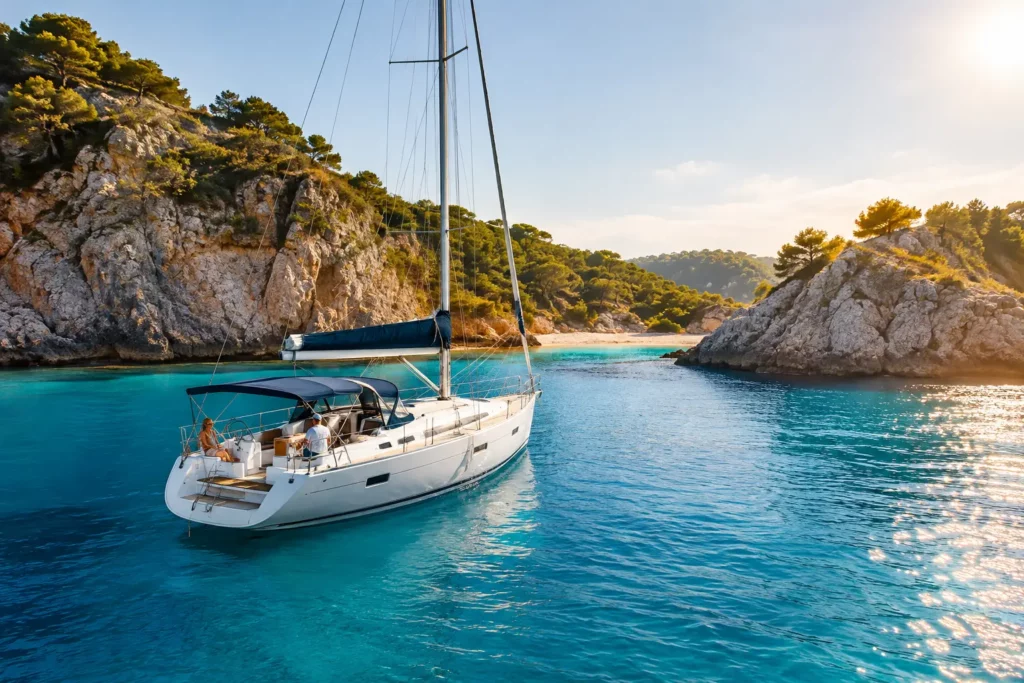
A perfect Spanish sailing day rarely begins in a marina. It begins when the coastline opens into pale limestone, the water changes from navy to clear turquoise, and your crew spots a quiet cala beyond the bow. The best Spanish coves for sailing reward travelers who leave room in the itinerary for an unplanned swim, a long lunch aboard, and one more night under the stars.
Spain offers far more than beautiful anchorages, though. The right cove depends on your boat, the wind, the season, and whether you want a lively beach scene or a peaceful overnight stop. For a first-time charter group, that local judgment can make the difference between a lovely route and an unforgettable one.
The best Spanish coves for sailing
The Balearic Islands are the natural starting point for a cove-focused charter. Mallorca, Menorca, Ibiza, and Formentera sit close enough to create flexible sailing days, but each has its own personality. Mainland Spain adds wilder options for crews who prefer dramatic coastlines and fewer marina stops.
Cala Pi, Mallorca
Cala Pi is one of Mallorca’s most striking arrivals from the sea. A narrow, fjord-like inlet cuts into the southern coast, with honey-colored cliffs rising above water that is often startlingly clear. It feels sheltered and intimate once inside, making it especially appealing after an open-water passage.
Space is limited, and the cove can become busy in high summer. Treat Cala Pi as a rewarding daytime swim stop rather than assuming it will be a comfortable overnight anchorage. Early arrival is your advantage.
Cala Mondrago, Mallorca
On Mallorca’s southeast coast, Cala Mondrago combines soft sand, pine-fringed headlands, and easy access to a protected natural setting. It is a crowd-pleaser for families and mixed groups because everyone can find their version of a good afternoon: swimming, paddleboarding, snorkeling, or simply reading in the shade of the bimini.
The trade-off is popularity. In July and August, visit early or late in the day, and be prepared to move on if the anchorage feels crowded. A skipper can help judge conditions and find a calmer alternative nearby.
Cala Varques, Mallorca
Cala Varques has a more remote character than many of Mallorca’s developed beaches. Its rocky edges, low forest, and bright water make it feel less polished and more like a true escape. For sailors, it is the sort of stop that explains why a yacht is better than a car for exploring this coastline.
Its exposure means it is not suitable in every wind direction. Check the forecast carefully, avoid treating it as a guaranteed overnight stop, and respect any local guidance on protected seabed areas.
Portals Vells, Mallorca
Portals Vells is a practical favorite on Mallorca’s southwest coast, particularly for crews beginning or ending near Palma. The bay is attractive rather than isolated, with turquoise water, small beaches, and caves carved into the surrounding rock. It is also a useful first-night option when you want to settle into the boat before heading farther afield.
Because it is close to popular charter bases, it can fill quickly. It works best for a relaxed lunch, a swim, or a short first leg, not as a promise of solitude.
Cala Macarella and Cala Macarelleta, Menorca
Few images capture Menorca better than the twin coves of Macarella and Macarelleta. White sand meets impossibly blue water below steep, wooded slopes, and the contrast is as vivid from the deck as it is from shore. This is a memorable stop for couples, photographers, and anyone seeking the classic Balearic palette.
The beauty brings traffic. Arrive outside peak beach hours when possible, and pay close attention to official restrictions, buoy fields, and the wind forecast. Menorca’s southern coves are stunning in settled weather but can quickly lose their comfort when the wind shifts south.
Cala Turqueta, Menorca
Cala Turqueta earns its name from its luminous turquoise water. It is smaller and more secluded in feel than some of Menorca’s headline beaches, with wooded hills behind the shore and excellent conditions for a swim when the sea is calm.
This is a place to enjoy quietly. Keep music low, use a tender thoughtfully around swimmers, and never assume a beautiful cove has room for every boat that arrives. Responsible seamanship protects the experience for everyone.
Cala Morell, Menorca
On Menorca’s north coast, Cala Morell offers a very different atmosphere: sculpted rock, clear deep water, and a more rugged landscape. There may not be the broad sand beach found at Macarella, but that is part of its appeal. It suits crews who value a dramatic swim stop and a quieter, less postcard-perfect mood.
Northern Menorca requires more caution than the island’s sheltered south coast. It can be spectacular in benign conditions, but wind and swell determine whether it is comfortable. Build this stop into a flexible plan rather than a fixed schedule.
Cala d’Hort, Ibiza
Cala d’Hort is one of Ibiza’s most recognizable anchorages, facing the powerful silhouette of Es Vedra. By late afternoon, the light on the rock and surrounding cliffs gives the whole bay a cinematic quality. It is ideal for a sunset aperitif aboard, followed by dinner in a nearby coastal village if your itinerary allows.
This is not a secret cove, and that is fine. The point is the setting. Choose a calm-weather day, arrive with time to find suitable space, and enjoy the view rather than chasing complete privacy.
Cala Xarraca, Ibiza
For a more low-key northern Ibiza experience, Cala Xarraca is a strong choice. The water is clear, the rocky shoreline is excellent for snorkeling, and the bay feels farther from Ibiza’s famous nightlife. It works beautifully for groups that want the island’s energy available, but not every night.
The anchorage’s comfort depends on prevailing conditions, so use it as a weather-led stop. A well-planned Ibiza route should always include alternatives on the opposite side of the island.
Cala Saona, Formentera
Cala Saona is Formentera at its most relaxed: shallow blue water, a curved beach, and red-tinged cliffs that glow near sunset. It is a favorite with families and couples because the atmosphere is gentle, and the island’s slower rhythm is immediately noticeable.
Formentera is also where careful anchoring matters most. Posidonia seagrass is protected, and anchoring rules are actively enforced in many areas. Use designated mooring systems where required and follow current local instructions rather than dropping anchor wherever the water looks inviting.
Cala Montjoi, Costa Brava
North of Barcelona, Cala Montjoi offers a change of pace from the Balearics. The Costa Brava’s pine-covered hills fall toward a deeply indented coast, and this bay can provide a handsome, sheltered stop for crews exploring the Cap de Creus area. It is a good fit for sailors who like their scenery a little wilder and their cruising days more varied.
Conditions on the Costa Brava can be shaped by the tramontana, a strong northerly wind that deserves respect. Check local forecasts, secure the boat properly, and have a marina alternative ready if the weather turns.
Cala de San Pedro, Cabo de Gata
For an off-the-beaten-track feel, Cala de San Pedro in Andalusia’s Cabo de Gata-Nijar Natural Park is compelling. Dry, volcanic hills and a small beach create a raw, sun-washed landscape unlike the greener Balearic islands. The sense of arrival is part of the reward.
This is better suited to experienced crews or a skippered charter with sound local planning. Shelter, supplies, and weather windows require more attention here, but the payoff is a coastline that feels genuinely remote.
How to choose the right cove itinerary
The best route is not the one that attempts to visit the most famous coves. It is the one that matches your crew’s confidence, pace, and priorities. A family with young children may prefer shorter legs, sandy swimming spots, and dependable overnight marinas. A group of friends may want to combine quiet anchorages with one or two evenings in Ibiza. Confident sailors may be happy to let the wind decide between Menorca’s south coast and its rugged north.
Season matters just as much. May, June, September, and early October often offer warmer water, less pressure on anchorages, and more choice when planning your day. July and August bring reliable sunshine and a lively atmosphere, but also higher demand for boats, berths, restaurants, and moorings. Booking early gives you more control over both yacht selection and route design.
Boat choice changes the experience, too. A catamaran provides broad deck space and stability for families or groups who expect to spend long afternoons at anchor. A monohull sailing yacht offers a more traditional sailing feel and can be a wonderful choice for couples or sailors who want the journey under sail to be central to the vacation. If you are new to chartering, a professional skipper adds local knowledge without taking away your freedom.
Anchor with care, sail with confidence
Spanish coves are beautiful because many remain protected, and charter guests play a real role in keeping them that way. Follow posted rules, use official buoys when available, avoid anchoring on seagrass, and keep a close eye on wind direction and swell. A cove that is calm at lunch can become uncomfortable by sunset.
Before departure, ask for a route built around realistic distances, protected overnight options, and a few weather-friendly alternatives. Summer Yacht Charters can help match the yacht, skipper, and itinerary to the way your group actually wants to travel. Then leave enough open space in the plan for the moment that matters most: seeing a quiet stretch of Spanish coast and deciding, together, to stay a little longer.