Can Beginners Charter Catamarans? Yes, With a Skipper
Can beginners charter catamarans? Yes - with the right boat, skipper, route, and support, a first sailing vacation can feel safe, relaxed, and memorable.
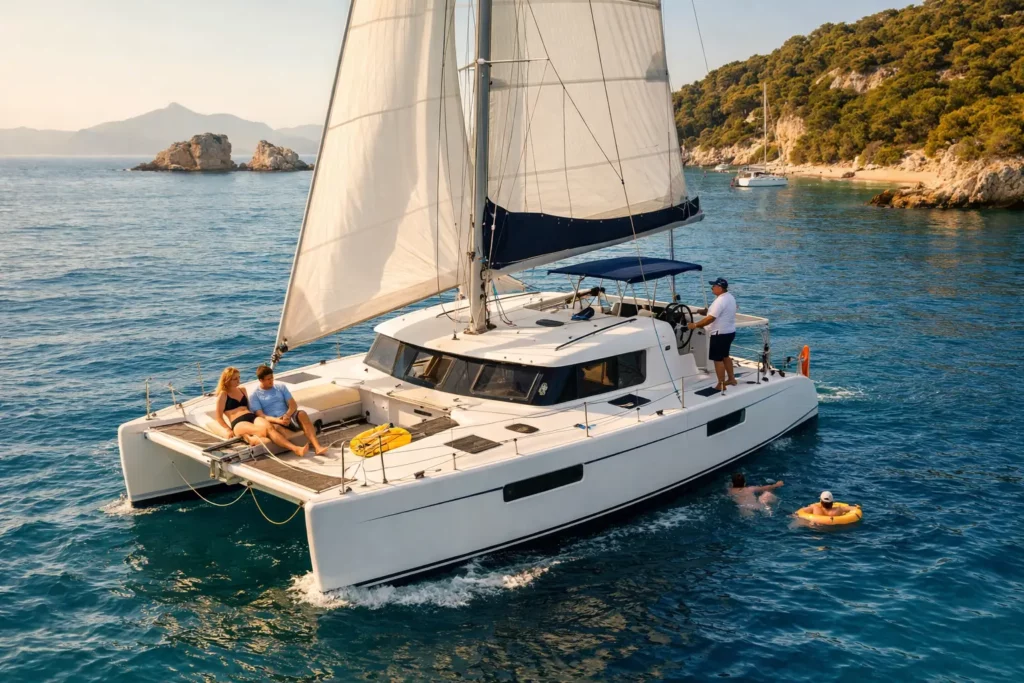
A first yacht vacation should begin with the sound of water against the hull and a cold drink in hand, not anxiety over navigation rules. So, can beginners charter catamarans? Absolutely – provided you choose the right charter type, a sensible route, and an experienced skipper who understands that this is your holiday, not a sailing exam.
For couples, families, and groups of friends, a catamaran is often one of the most comfortable ways to experience the coast. It offers space, stability, and the freedom to wake up in a quiet bay rather than the same hotel room every morning. You do not need to know how to trim a sail or read a chart to enjoy it.
Can Beginners Charter Catamarans Without Sailing Experience?
Yes, beginners can charter a catamaran through a skippered charter. Your professional skipper takes responsibility for navigation, docking, weather decisions, and the safe operation of the yacht. You simply decide how involved you would like to be.
Some guests want to sit forward with a book, swim at every stop, and let the day unfold. Others want to learn the basics: how the sails work, why an anchorage is chosen, or what the skipper is checking before leaving the marina. Both approaches are welcome. A good skipper reads the mood of the group and shapes the week around it.
A bareboat charter is different. In that arrangement, you are the captain and must show the required sailing qualifications and relevant experience. Requirements vary by country, charter company, and the size of the yacht, but bareboat chartering is not usually the best starting point for a first-time sailing vacation. There is no prize for taking on responsibility before you are ready.
For most beginners, a skippered catamaran delivers the best balance: real freedom on the water, with a knowledgeable professional handling the parts that demand experience.
Why Catamarans Work So Well for First-Time Guests
The appeal is not only the postcard view from the deck. Catamarans are designed in a way that makes life aboard feel approachable, especially for guests who are unsure whether they are “boat people.”
Two hulls create a broad, level platform with generous cockpit space and a large net at the bow. Cabins are usually separated into the hulls, giving couples and families more privacy than they might find on a similarly sized monohull. The salon and galley are bright, social spaces, while the cockpit becomes the natural setting for long breakfasts, sunset aperitifs, and meals under the stars.
They also tend to heel less under sail than a monohull. That means the boat stays more upright, which many first-time guests find reassuring. It does not mean a catamaran never moves – wind, swell, and wake are still part of being at sea – but the experience is often more comfortable for people who are worried about balance or motion sickness.
There are trade-offs. Catamarans are typically more expensive than monohulls of a comparable cabin count, and they can have higher marina fees because of their beam. In peak summer, popular ports may have limited space for larger yachts. An experienced charter advisor and skipper can help plan around this, mixing marinas with peaceful anchorages where the catamaran truly comes into its own.
What Your Skipper Actually Does
A skipper is far more than someone who steers. Before departure, they inspect the boat, review the weather, explain safety equipment, and discuss the route with you. During the week, they manage sailing, anchoring, fuel, docking, local regulations, and the countless small decisions that keep a charter relaxed rather than rushed.
They also bring local knowledge that is hard to get from an itinerary map. Your skipper may know which bay is calm in a certain wind, when to arrive at a small harbor, where the water is clearest for a morning swim, or which waterfront restaurant deserves a reservation. This knowledge can transform a nice trip into one that feels personal and unhurried.
The skipper has their own cabin and needs reasonable privacy and rest time, particularly after a long day on the water. Discuss expectations early. If you want a highly social skipper who shares meals with the group, say so. If you prefer more privacy, that is equally reasonable. Clear communication makes the onboard rhythm easy for everyone.
A hostess or chef may also be available on some charters. This is optional, but can be valuable for larger groups or guests who would rather spend their time swimming and exploring than provisioning, cooking, and tidying up after meals.
Choose a First-Week Itinerary That Leaves Room to Breathe
Beginners sometimes imagine that the best charter covers the most islands. Usually, the best first charter does the opposite. It allows time for slow mornings, easy passages, swimming stops, and a backup plan if the wind changes.
In Greece, Croatia, Italy, or other Mediterranean cruising areas, the right route depends on the season, the prevailing wind, your departure marina, and your group’s pace. A relaxed itinerary often includes short hops of two to four hours rather than daily all-day passages. That gives you time to settle into life aboard and enjoy each place rather than treating the yacht as transportation between reservations.
Tell your charter team what matters most. Perhaps your group wants lively villages and late dinners. Perhaps you are traveling with children and want protected bays, paddleboarding, and early nights. Maybe it is a honeymoon and privacy matters more than nightlife. There is no standard “perfect route.” The right one fits the people on board and respects the forecast.
Weather can change plans, even during a sunny summer week. This is normal, not a failure. Flexibility is one of the quiet luxuries of a yacht charter. A skilled skipper may switch an anchorage, reverse the route, or suggest an overlooked harbor that is more comfortable in the conditions. Those decisions protect the experience as much as they protect the boat.
How to Pick the Right Catamaran
Start with cabins, not simply the maximum number of guests. A four-cabin catamaran can be excellent for four couples, but if your group values extra space, choosing a larger boat with fewer occupied cabins may make the week feel considerably more relaxed. Ask about cabin layouts, bathroom arrangements, air conditioning, water toys, and whether the boat has a generator or watermaker.
For a first charter, newer is not always necessary, but condition and maintenance matter enormously. A well-kept yacht with a reputable skipper and a straightforward layout is often a better choice than the largest possible boat at the lowest headline price.
Also budget beyond the base charter rate. Typical additional costs can include the skipper, fuel, marina fees, food and drinks, a refundable security deposit or insurance, and optional extras such as a hostess, paddleboards, or transfers. Transparent planning prevents awkward surprises once you reach the marina.
At Summer Yacht Charters, the value of working with a real sailor assistant is not simply access to a large choice of yachts. It is having someone ask the questions a first-time guest may not know to ask: Is this route realistic? Will this catamaran suit two families? What happens if the weather shifts? That guidance is where confidence begins.
A Few Smart Habits for Your First Charter
Pack soft-sided luggage, since hard suitcases are awkward to store in cabins. Bring reef-safe sunscreen, a light layer for breezy evenings, non-slip sandals, and any motion-sickness remedy you prefer. Keep your first day simple. After travel and check-in, a quiet first evening near the departure marina can be far more enjoyable than rushing out to sea.
Once aboard, listen carefully to the safety briefing and ask questions without hesitation. Learn where life jackets are stored, how to move around when the yacht is underway, and when children should wear flotation devices. Use handholds, avoid walking around with glassware, and keep an eye on the weather even when the sky looks friendly.
Most of all, release the pressure to do it perfectly. A catamaran charter is not about proving you can live like a sailor. It is about sharing breakfast in a new cove, jumping into impossibly clear water, and watching the shoreline turn gold at the end of the day. With the right skipper and a route built around your group, your first week at sea can feel wonderfully natural – and make you wonder why you waited so long.