Crewed Yacht Holidays in the Mediterranean
Plan crewed yacht holidays Mediterranean travelers remember, with the right yacht, a trusted crew, flexible routes, and time to truly unwind at sea daily.
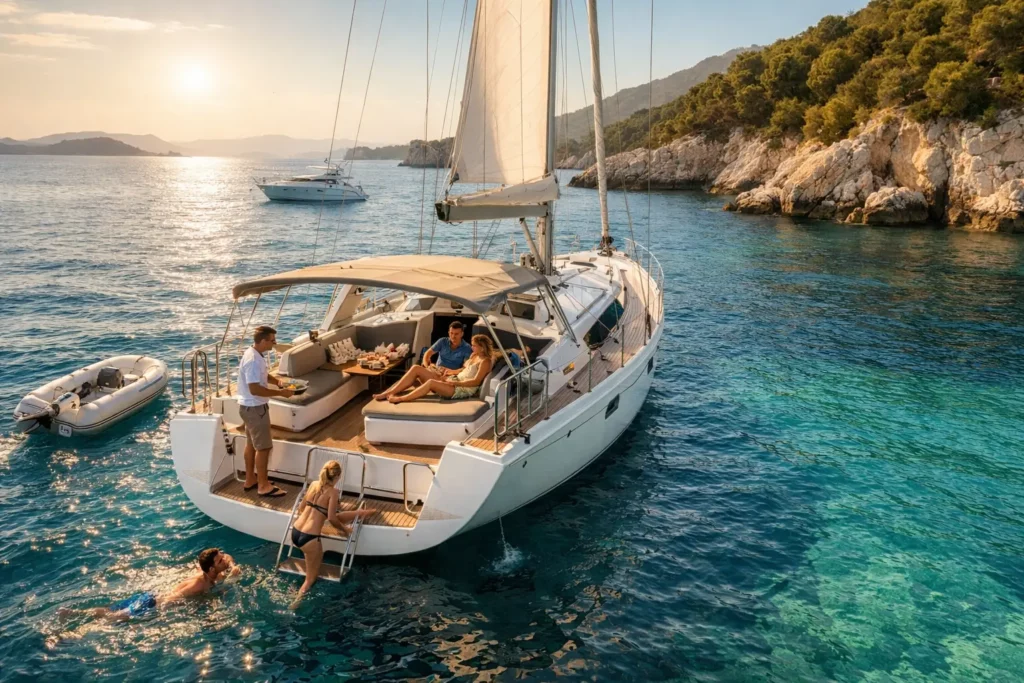
The first swim of the day before breakfast, a harbor town appearing around the headland, lunch in a quiet cove where the only soundtrack is the water against the hull – crewed yacht holidays Mediterranean travelers choose are built around moments that resorts cannot schedule. The real luxury is not simply being on a beautiful boat. It is having capable people on board who make the boat, route, meals, and daily rhythm work around you.
For couples, families, and groups of friends, a crewed charter changes the shape of a Mediterranean vacation. Instead of unpacking and repacking between hotels, coordinating ferries, or debating where to eat every night, your floating home moves with you. You wake up close to the places most visitors only see from shore.
What a Crewed Yacht Holiday Actually Includes
A crewed charter means the yacht comes with professional staff. At a minimum, this is usually a skipper responsible for navigation, anchoring, local conditions, and the safe operation of the yacht. On larger yachts, the crew may also include a chef, hostess, deckhand, or stewardess. Their roles are different, but the purpose is the same: to let guests enjoy the sea without taking on the work of running a vessel.
The skipper is more than the person at the helm. A good skipper reads the weather, understands the character of each anchorage, knows which harbor can feel lively or crowded at a particular time, and adjusts the plan when conditions call for it. That judgment is especially valuable in the Mediterranean, where a short distance can bring a meaningful change in wind, sea state, and atmosphere.
A hostess often handles breakfasts, light lunches, provisioning, cabin tidying, and the small details that keep the boat comfortable. A chef brings another level of occasion to the experience, whether that means long lunches built around local produce or relaxed dinners under the stars. The precise inclusions depend on the yacht and crew arrangement, so it is worth clarifying them before booking rather than assuming every charter operates the same way.
Why the Mediterranean Is Made for Yacht Travel
The Mediterranean offers an unusual concentration of islands, historic towns, protected bays, and coastal restaurants within practical sailing distances. You can spend an afternoon exploring a walled old town and still anchor in clear water before sunset. That variety is why one region can suit both a celebratory trip with friends and a low-key week for a family.
Greece is often about island-hopping, bright villages, and swims in deep blue water. Croatia combines hundreds of islands with polished marinas, historic ports, and a route that can be as active or as quiet as you wish. Italy brings dramatic coastlines, food-driven stops, and the appeal of mixing time at sea with time ashore. Southern France and Spain suit guests who want stylish beach clubs, excellent dining, and a more cosmopolitan rhythm, while Turkey rewards those looking for pine-covered coves, ancient sites, and particularly peaceful anchoring.
The best destination is not automatically the one with the most famous photographs. It depends on the month, your group, and the pace you want. A family traveling with younger children may value shorter passages and protected bays. Friends planning a milestone birthday may prefer restaurants, nightlife, and a larger yacht with generous deck space. A couple may be happiest with a sailing yacht, a quiet itinerary, and no pressure to tick off every landmark.
Choosing the Right Yacht for Your Group
The yacht sets the tone for the week. A sailing yacht offers the pleasure of moving under sail, a closer connection to the elements, and an experience many returning charter guests find deeply restorative. Its trade-off is that cabins and shared spaces can be more compact, particularly on monohulls.
A catamaran is often an easy choice for families and groups who prioritize room. The wide cockpit, generous outdoor areas, and stable platform at anchor make daily life feel relaxed. Catamarans also tend to offer useful separation between cabins, which can matter when several couples are traveling together. In busy high-season marinas, however, their larger beam can mean higher berth costs or fewer available spaces.
Motor yachts deliver speed, powerful amenities, and the ability to cover more ground in less time. They work well for travelers who want a refined onboard setting and prefer longer distances between destinations. Fuel use is higher, so it should be understood as part of the budget from the beginning.
Space is not the only consideration. Ask about cabin configuration, air conditioning, water toys, sun protection, tender access, and whether the crew has experience with the type of trip you are planning. A yacht can look impressive in photographs yet be a poor fit if it has too few bathrooms, limited shade for children, or a layout that does not suit your group.
A Great Itinerary Leaves Room to Change
The temptation is to build a route around every name you recognize. In practice, the most memorable charters usually leave space for an unexpected recommendation from the skipper, a second afternoon in a bay everyone loves, or a weather-based change that leads somewhere better.
A well-designed week balances passage time with time to enjoy each stop. There is no universal ideal. Some guests enjoy sailing three or four hours most days; others want a short morning cruise, a long lunch, and an unhurried afternoon on a paddleboard. Be candid about that preference before the itinerary is drafted.
Weather remains the final authority. This is not a drawback but part of real travel at sea. A crew that changes an anchorage or reverses a route to avoid uncomfortable wind is protecting your experience, not reducing it. Flexibility is one of the clearest signs that a charter is being run professionally.
What to Budget Beyond the Charter Rate
The charter rate is the starting point, not always the complete vacation cost. Depending on the yacht and destination, additional expenses can include fuel, food and beverages, marina fees, local taxes, water toys, crew gratuity, and a provisioning allowance. Larger crewed yachts often use an advance provisioning allowance, commonly called APA, from which operating costs are paid and then reconciled at the end of the charter.
This should not make planning feel complicated. It simply means you should request a clear estimate based on your likely route and preferences. A week spent mostly at anchor with simple local meals has a different cost profile from a route with premium marinas, frequent restaurant reservations, and long motor runs.
The same principle applies to food. Some groups want the chef to organize every meal onboard. Others enjoy breakfast and lunch on the yacht but want dinner ashore most evenings. Neither approach is better. The right one leaves you feeling looked after while preserving the kind of holiday you came for.
First-Time Guests: What Makes the Difference
First-time charter guests often worry about seasickness, safety, privacy, or whether they will feel confined on board. These are sensible questions, and they are best answered early. A yacht specialist can recommend a stable catamaran, a protected cruising area, a sensible cabin layout, and a route with manageable passages rather than selling the same boat to every group.
You do not need sailing experience on a crewed charter. You only need to communicate what you enjoy. Tell your charter advisor if you want to learn a little about sailing, if anyone has mobility needs, if children are joining, or if a guest is celebrating something important. Those details shape decisions from the yacht shortlist to the first night’s anchorage.
Pack softer luggage rather than hard suitcases, bring reef-safe sun protection and a light layer for evenings, and expect bare feet to become the default. Most of all, arrive with a little patience for the sea’s own timetable. The best crews organize the details quietly, but nature still gets a vote.
Make the Yacht Feel Like Yours
A crewed yacht holiday is at its best when it is personal rather than over-programmed. Let the crew know whether you want early starts, slow mornings, active water sports, market visits, local tavernas, or quiet evenings at anchor. Their local knowledge is useful only when it is connected to your style of travel.
At Summer Yacht Charters, that conversation is where a real sailor’s perspective matters. The right advice is not about choosing the biggest yacht or the busiest route. It is about matching the boat, crew, and destination to the way your group wants to feel when the week is over.
Leave a little white space in the plan. It may become a sunrise swim, a spontaneous lunch in a harbor you had not heard of, or one more night in the bay nobody wanted to leave. Those are the details that stay with you long after you step back onto shore.