Monohull Versus Catamaran Comfort: Which Fits?
Monohull versus catamaran comfort comes down to motion, space, privacy, and plans. Choose the yacht that lets your crew relax at sea before you book.
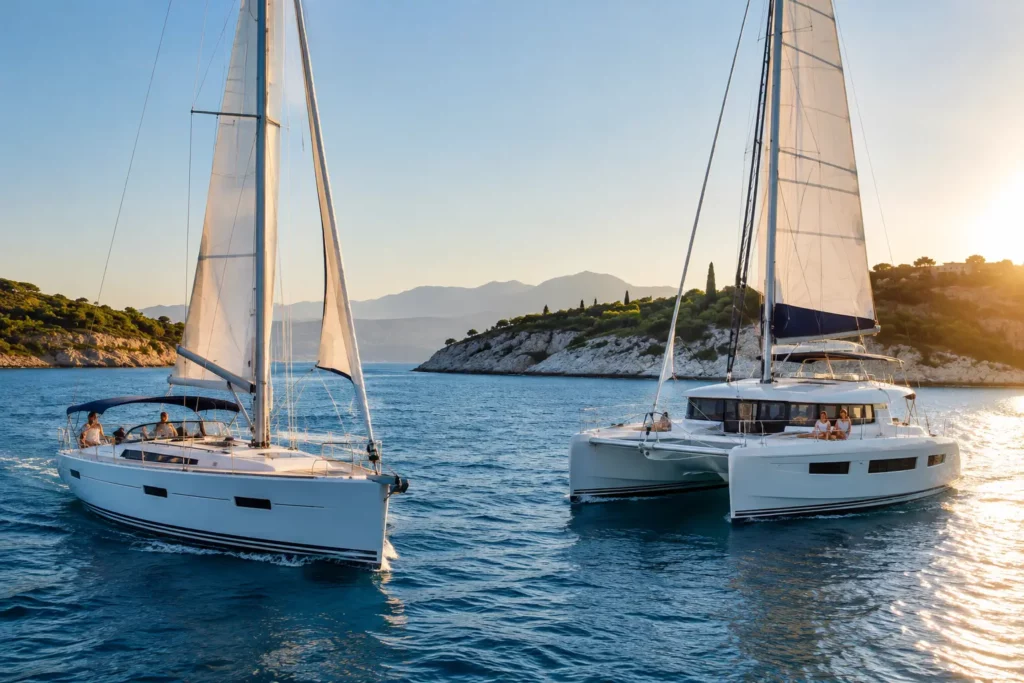
A quiet anchorage off a Greek island can feel completely different depending on the boat beneath you. On one yacht, everyone gathers around a wide cockpit table with room to stretch out. On another, the cockpit sits close to the water and the gentle heel of the hull turns an ordinary sail into the moment everyone remembers. Monohull versus catamaran comfort is not a simple contest. It is a question of what makes your particular crew feel at ease, connected, and ready to enjoy the week.
For families, friend groups, couples, and first-time charter guests, comfort usually means more than a soft mattress. It includes stability underway, personal space, easy movement around the boat, shade from the afternoon sun, and how relaxed everyone feels when the wind rises. Both boat types can deliver a remarkable sailing vacation. They simply do it in different ways.
Monohull Versus Catamaran Comfort at a Glance
A catamaran is often the immediate favorite for charter comfort because it is wide, level, and built around shared living space. Two hulls create a broad platform, so the salon, cockpit, deck areas, and cabins tend to feel open and distinct. At anchor, a catamaran generally rocks less from side to side than a monohull, which can be a meaningful advantage for guests who worry about seasickness or restless nights.
A monohull feels more traditional, more intimate, and often more connected to the water. It heels under sail, meaning it leans with the wind, and that movement is part of the appeal for sailors who want to feel the boat respond. The interior is usually narrower, but a well-designed monohull can feel warm rather than cramped, especially for a couple or a small group that values sailing performance over sprawling deck space.
Neither choice is automatically more luxurious. A premium monohull with a thoughtful layout may suit a couple far better than a large catamaran with more cabins than they need. The right decision comes from matching the boat to the people, itinerary, and kind of holiday you want.
Stability: The Comfort Question Everyone Asks First
Catamarans stay relatively flat when sailing. That makes it easier to prepare lunch, walk through the salon, read in the cockpit, or keep younger children settled while the boat is underway. For guests who have never chartered before, this level platform can remove much of the anxiety associated with a sailing vacation.
At anchor, the picture is more nuanced. A catamaran is very stable in a gentle swell, but its broad beam can sometimes react sharply when waves arrive from the side. A monohull rolls differently, with a deeper, more rounded motion. Conditions, anchoring position, and skipper experience often matter as much as the number of hulls.
Under sail, a monohull heels, and there is no disguising that. Some guests find it exciting and reassuring, because they can feel the wind doing its work. Others would rather keep their drink on the table and their shoulders level. If anyone in your group is especially nervous about motion, a catamaran is usually the more forgiving place to start.
Motion and seasickness are not the same thing
Seasickness is influenced by sleep, hydration, food, anxiety, and sea conditions, not just yacht design. A catamaran’s flatter ride helps many guests, but it is not a guarantee. Planning sensible daily distances, leaving harbor early, and choosing protected anchorages often make a bigger difference than people expect.
A skipper-assisted charter can be particularly valuable here. A knowledgeable skipper can adjust timing and route choices when the forecast changes, helping the crew spend more time swimming in clear water and less time pushing through uncomfortable seas.
Space, Privacy, and Life at Anchor
This is where catamarans have their clearest advantage. Their beam creates separate zones for relaxing together or taking a break alone. The cockpit is usually wide enough for long lunches, card games, and evening drinks without everyone needing to shift seats. Many models also offer a forward lounge area, a flybridge, or netted space between the hulls for sunbathing above the water.
Cabins are often positioned in separate hulls, which gives couples and families a useful degree of privacy. One guest can sleep in while another makes coffee without the entire boat waking up. For two or three couples traveling together, that layout can protect the easygoing atmosphere that makes a charter special.
Monohulls are more compact, but their layouts create a different kind of closeness. The cockpit tends to be the natural social center, and the salon below feels sheltered and companionable after sunset. On a sailing-focused itinerary, the narrower deck can also feel secure and purposeful while underway. A monohull may be the better choice for guests who do not need separate zones and would rather put their charter budget toward a newer boat, a larger main cabin, or more days on the water.
Cabins and Bathrooms: Look Beyond the Boat Type
Do not assume every catamaran cabin is oversized or every monohull cabin is tight. Charter yachts vary dramatically by year, manufacturer, and layout. Some catamarans trade cabin size for more berths, while some monohulls offer an exceptional owner’s suite in the bow or stern.
Ask how many people will actually sleep aboard, not just how many the yacht can accommodate. A boat rated for ten guests may feel comfortable for eight and positively spacious for six. If your group includes tall adults, light sleepers, teenagers who want a little independence, or guests who need an ensuite bathroom, those details should shape the shortlist early.
Galley design matters too. A catamaran’s galley is commonly on the same level as the cockpit, keeping whoever is preparing meals part of the conversation. On many monohulls, the galley is below deck, which can be cozier in the evening but less social during a sunny lunch stop.
Sailing Feel and Access to the Water
Comfort is emotional as well as physical. A monohull delivers the classic sensation of sailing: the rail close to the sea, the hull leaning into the breeze, and the satisfying rhythm of trimming sails and finding balance. For sailors and adventurous first-timers, that feeling can be the reason to choose a monohull.
Catamarans are also genuine sailing yachts, but the experience is calmer and more spacious. They often offer excellent outdoor living and easy access to the water from broad aft platforms. That is ideal for a holiday centered on swimming, paddleboarding, snorkeling, and lingering at anchor.
There are practical trade-offs. Catamarans need wider berths in marinas and may cost more to dock in busy ports. Their greater width can limit availability in smaller harbors during peak season. Monohulls are easier to fit into conventional marina spaces and can be less expensive overall, leaving room in the budget for a skipper, provisions, or a longer itinerary.
Which Yacht Will Make Your Crew Happiest?
Choose a catamaran if your priority is stable living space, easy movement, privacy for multiple couples, and long unhurried days at anchor. It is often the comfortable answer for multigenerational families, groups with young children, and friends who want the yacht itself to feel like a floating villa.
Choose a monohull if you want a more traditional sailing experience, are traveling as a couple or smaller group, and enjoy the romance of moving with the wind. It can also be a smart choice when marina access, budget, or an active sailing itinerary matters more than maximum square footage.
The best charter conversations begin with your crew rather than a boat category. How many cabins do you truly need? Will you spend more time sailing or swimming? Does anyone feel uneasy about motion? Are private bathrooms essential? Answer those questions honestly, and the right yacht often becomes obvious.
At Summer Yacht Charters, that is the value of speaking with a real sailing expert before you commit. The boat should not just look impressive in photos. It should make every person aboard feel comfortable enough to stop checking the clock, look toward the horizon, and enjoy the freedom that brought them to the sea.