Sailing Yacht Versus Motor Yacht for Your Vacation
Sailing yacht versus motor yacht: compare pace, comfort, cost, crew, and destinations to choose the right charter for your Mediterranean vacation today.
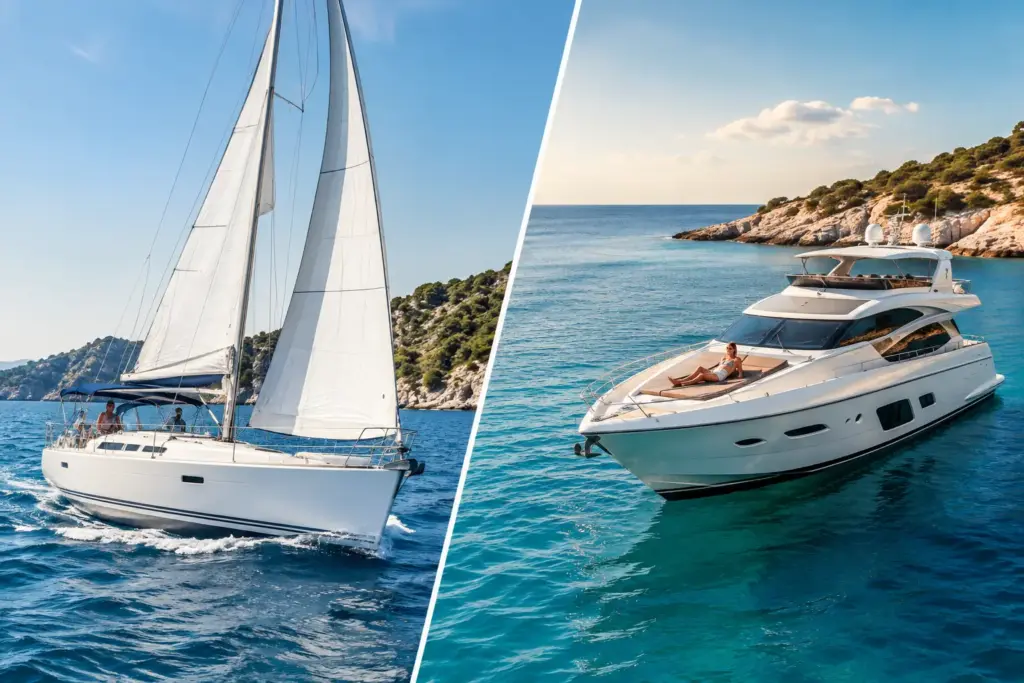
The sailing yacht versus motor yacht decision shapes far more than the boat you book. It sets the rhythm of your vacation: whether mornings begin with sails lifting in a quiet bay or with coffee on deck as you cruise toward a new island. Both deliver private beaches, beautiful anchorages, and the freedom to travel on your own schedule. The right choice comes down to how you want to spend your time on the water.
For some guests, the sound of wind in the rigging is the reason to charter at all. For others, a fast, spacious yacht means seeing more of a coast in one memorable week. There is no universal winner. There is only the yacht that fits your group, your route, and your idea of a great escape.
Sailing Yacht Versus Motor Yacht: The Essential Difference
A sailing yacht uses wind as its primary source of propulsion, with an engine for harbor maneuvers, calm conditions, and practical passages. It is a more connected way to travel. You feel the breeze, follow the weather, and often find that the journey between islands becomes as rewarding as the destination itself.
A motor yacht is built around speed, space, and convenience. It can cover greater distances in a shorter time, often has a broader beam for generous social areas, and makes it easier to keep a full itinerary even when your vacation window is limited. A motor yacht can be ideal for travelers who want lunch in one harbor, a swim in another bay, and sunset at a waterfront restaurant farther along the coast.
Neither experience is better by default. A couple hoping to slow down around the Greek islands may find a sailing yacht deeply romantic. A family with different energy levels, or friends planning a lively week across Croatia, may appreciate the room and flexibility of a motor yacht.
Choose a Sailing Yacht If the Journey Matters Most
A sailing charter has a special ability to make people present. Once the sails are up, conversation changes. Phones tend to disappear, the coastline looks different, and even a short passage can feel like a shared achievement. For travelers who want a holiday with genuine atmosphere, this is hard to beat.
Sailing yachts are generally more fuel-efficient than motor yachts, which can make a meaningful difference to the running costs of a charter. They are also often well suited to guests who value an active, lower-impact style of travel. You do not need sailing experience to enjoy one. With a professional skipper, beginners can relax and learn as much or as little as they like.
The trade-off is that wind and weather influence your pace. A skipper will always prioritize safety and comfort, which may mean adapting a route, changing an anchorage, or using the engine when conditions are light. That flexibility is part of sailing, but it may not suit guests determined to visit a long list of places in a single week.
Monohull or Catamaran?
When people picture a sailing yacht, they often imagine a classic monohull with one hull, a pointed bow, and the satisfying heel of the boat as it moves under sail. It is an engaging, traditional sailing experience and a wonderful option for couples, smaller groups, and guests who enjoy the feel of the sea.
A sailing catamaran offers a different kind of comfort. Its two hulls create a wide, stable platform with large cockpit areas, easy indoor-outdoor living, and usually more separation between cabins. It is especially popular with families and groups of friends. Catamarans do cost more in many marinas because of their width, but for a group sharing the charter price, the extra space can be worthwhile.
Choose a Motor Yacht If Time and Comfort Lead
Motor yachts make ambitious itineraries realistic. If your group wants to experience several distant islands, reach a particular beach club for lunch, or combine coastal towns that would take much longer under sail, speed is a major advantage. A motor yacht is not about rushing the vacation. It is about having more choice over where the day takes you.
Space is another strong reason to choose one. Many motor yachts offer expansive sun pads, large lounges, shaded dining areas, and cabins designed for relaxed comfort. On larger yachts, guests may also have crew beyond the captain, such as a hostess, chef, or deckhand. That added service can turn a charter into a highly polished vacation, particularly for celebrations or multigenerational family travel.
The practical consideration is fuel. Motor yachts consume significantly more fuel than sailing yachts, and fuel is commonly charged separately from the base charter rate. Dockage, crew, and provisioning can also add to the overall budget depending on the boat and destination. A good charter plan should discuss these costs early, not treat them as an afterthought.
Motor yachts can also feel less intimate with the sea than sailing boats. The ride may be louder at speed, and the experience is centered more on the destinations and onboard comfort than on the art of moving with the wind. For many travelers, that is precisely the appeal.
Compare the Costs Before You Compare the Photos
A beautiful yacht photograph tells only part of the story. The more useful question is what your week will cost once the boat leaves the marina. The base charter rate is important, but expenses vary considerably by yacht type, region, season, and the level of service you choose.
On a sailing charter, expect to budget for provisions, marina fees, fuel, and skipper costs if you are not bareboating. Catamarans may carry higher berth fees in busy ports, yet they can offer excellent value when their space is shared among six, eight, or more guests.
On a motor yacht, fuel is usually the biggest variable. The distance traveled and cruising speed matter greatly, so a route with longer passages will cost more than a relaxed itinerary based around nearby bays. If you want the convenience of a fast yacht without surprises, ask for a realistic fuel estimate based on the route you have in mind.
A charter specialist should explain what is included, what is estimated, and what remains flexible. This is especially helpful for first-time guests, who should be able to plan confidently without getting lost in charter terminology.
Think About Your Group, Not Just Your Dream Boat
The best yacht reflects how your group actually travels. A sailing yacht works beautifully for guests who enjoy participating, reading in the cockpit, swimming from the stern, and letting the day unfold naturally. It encourages a slower, more social rhythm.
A motor yacht can be the stronger choice when the group has a fixed wish list, younger children who benefit from shorter passages, or guests who prioritize generous lounging space and easier movement around the boat. It can also suit travelers who want to combine a yacht vacation with restaurant reservations, nightlife, and visits to several well-known coastal towns.
Consider sleeping arrangements honestly. Two couples may be perfectly happy in similar cabins, while a family may need a larger primary cabin and a practical layout for children. Ask about air conditioning, bathroom configuration, shade, water toys, and crew accommodation as well. These small details are often what make a week feel effortless rather than cramped.
Let the Destination Influence the Decision
Some destinations naturally reward a sailing itinerary. Greece offers countless island hops, bright winds, and anchorages where arriving under sail feels exactly right. The Italian coast invites unhurried afternoons, long lunches, and scenic passages between islands and seaside villages.
Other routes can favor motor power, especially when you want to cover more ground. Along Croatia’s long, island-dotted coastline, a motor yacht can connect distant highlights efficiently. In the south of France or Spain, it can make sense for guests who want a blend of secluded coves and glamorous ports within the same week.
Weather patterns matter, too. A professional skipper will shape daily passages around local winds and sea conditions, whether you choose sail or power. The best itinerary leaves room for those decisions rather than treating the sea like a fixed road map.
The Best Charter Starts With an Honest Conversation
You do not need to arrive with every answer. Tell your charter advisor what your group enjoys, how active you want to be, the places you hope to see, and the budget you want to protect. At Summer Yacht Charters, that conversation is guided by real sailing knowledge, not a one-size-fits-all recommendation.
If you are drawn to quiet passages, swimming stops, and the satisfaction of traveling with the wind, choose the sailing yacht. If your ideal week means more distance, more deck space, and a faster route between favorite places, choose the motor yacht. Give yourself permission to choose the feeling you want from the week, then let the right boat carry you there.